Refrigerator not cooling freezer works Atlanta
Bozmanfix provides same-day refrigerator repair throughout metro Atlanta — Fulton, DeKalb, Gwinnett, Cobb, and surrounding counties — with technicians carrying parts for all major brands including Samsung, LG, Whirlpool, GE, and Frigidaire.
When the freezer works perfectly but the refrigerator section warms above 40°F, the problem is always a circulation failure between the two compartments — not the compressor. The five most common causes: a failed evaporator fan motor, frost blocking the evaporator coils from a defrost failure, a stuck or broken damper control, a faulty thermistor sending wrong readings to the control board, or a partial control board failure from power-surge damage.
You can safely check fan operation, blocked vents, and frost buildup yourself — refrigerant issues, defrost repairs, and control board replacement require a licensed technician.
Fridge Warm but Freezer Cold? We Diagnose It Today.
Food spoils above 40°F. Same-day refrigerator repair across metro Atlanta, upfront pricing before we start, parts and labor warranty.
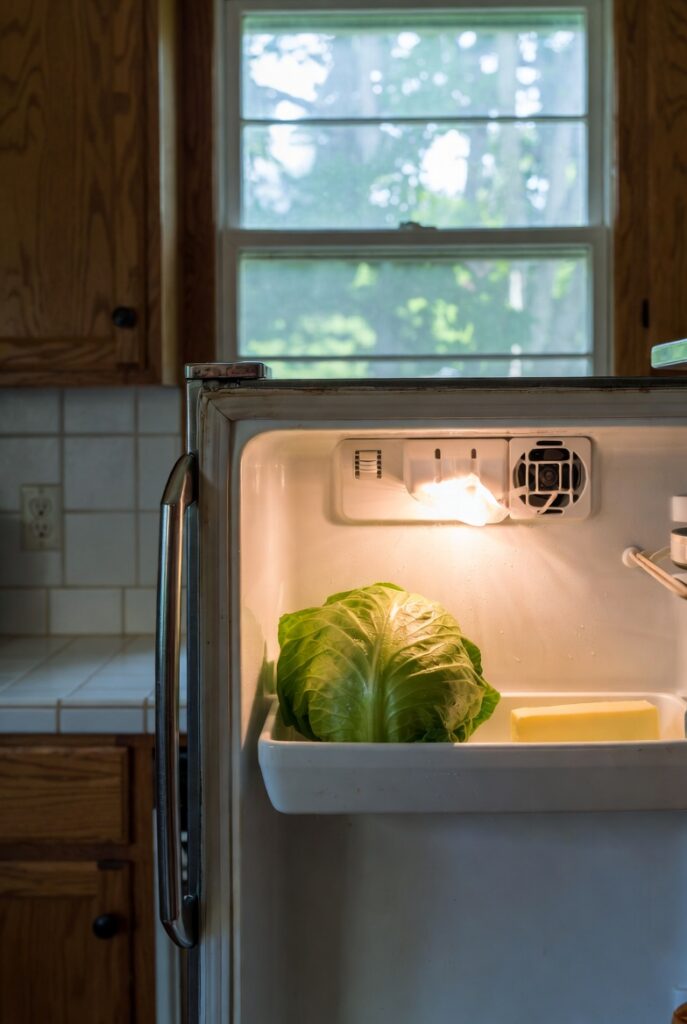
You open the refrigerator expecting a blast of cold air, but it feels closer to room temperature — milk warm to the touch, condensation on the lettuce, butter softening at the edges. Yet the freezer above or below is rock-solid frozen, making ice perfectly.
This split personality confuses Atlanta homeowners at the worst times: the compressor hums steadily, the interior light works, everything seems normal — but the fresh-food section keeps creeping upward while the freezer stays arctic.
In Atlanta’s climate the problem accelerates. The refrigerator works harder during humid summers, and when cooling fails in just one section, warm kitchen air compounds it fast. Food spoils, a sour smell develops, and you find yourself throwing away groceries you just bought.
Why the Fridge Fails While the Freezer Keeps Working
Cold air generates in the freezer’s evaporator coils, then a small fan pushes it through vents and a damper into the fresh-food compartment. When something blocks or disrupts that airflow, the freezer keeps cooling itself by proximity while the refrigerator receives nothing. Here’s where it breaks down:
🌀 Evaporator Fan Motor Failure 8–10 yrs
The fan behind the freezer’s back panel circulates cold air to both compartments. When it burns out or seizes, the freezer stays cold (it’s right next to the coils) but the fridge slowly warms because nothing pushes air into it. In older Buckhead and Virginia-Highland units, these motors wear out after 8–10 years of constant operation.
❄️ Defrost Failure / Coil Frost Buildup
When the defrost heater, timer, or thermostat fails, frost blankets the evaporator coils and blocks heat exchange. The freezer may still hold cold, but the fridge gets no circulation. Atlanta’s humidity speeds frost accumulation when the defrost cycle isn’t running.
🚪 Stuck or Broken Damper Control
This motorized door regulates cold air from freezer to fridge. When the motor fails or the door sticks closed, cold air stays trapped in the freezer — sometimes making it too cold — while the fridge gets nothing. The small plastic gears crack over time, especially after temperature swings during power outages.
🌡️ Faulty Thermistor Sensor
The thermistor tells the control board how much cooling the fridge needs. A bad sensor reading 35°F when it’s really 55°F makes the board keep the damper closed. Common in newer electronic-control French door and side-by-side models in Midtown and Brookhaven condos.
💨 Refrigerant Leak (Dual-Evaporator)
Rare, but in dual-evaporator models a leak in the fridge’s dedicated coil kills that section while the freezer’s independent system keeps running. Look for oily residue or a hissing sound at startup. Requires EPA-certified refrigerant handling — not a DIY fix.
🖥️ Partial Control Board Failure
Voltage spikes during Atlanta thunderstorms damage individual board circuits — the compressor and freezer fan keep running while the damper motor or fridge fan gets no signal. More frequent in older-grid areas like East Atlanta and Decatur.
What You Can Safely Check Yourself
Listen for the Evaporator Fan STEP 1
Open the freezer and stay quiet 30 seconds — you should hear a steady hum or whir from behind the back panel. Press the door switch with your finger; release it and listen. If the fan doesn’t start within a few seconds, the motor has likely failed. No tools needed.
Check the Vents for Airflow STEP 2
Find the vents on the back wall (or ceiling on top-freezers) of the fridge section. Clear nearby food and hold your hand to the openings — you should feel gentle cold airflow. A bag of frozen veggies or a pizza box on the freezer side can block the vents entirely. Remove freezer contents to inspect both sides.
Examine Coils for Frost STEP 3
Unplug the fridge first. Remove the freezer back panel (Phillips or ¼” nut driver). Thick white frost completely covering the coils means the defrost system failed. Snap a photo to describe it accurately when you call. Don’t scrape or chip — you’ll damage the fin coils.
Test the Damper STEP 4
Set controls to coldest, wait 10 minutes, recheck vent airflow. Hold a tissue near the vent — a working damper moves it within a few minutes. Some models have a diagnostic mode (check your manual for the button combo) for Samsung, LG, Whirlpool, or GE units.
Dollar-Bill Seal Test STEP 5
Close the door on a dollar bill and pull — you should feel resistance. Test all around the perimeter, especially top and bottom. If it slides out easily, the seal leaks warm air. A bad seal won’t cause this exact symptom alone, but it makes the system work harder. Clean seals with warm soapy water and check they aren’t twisted.
🔧 Fan dead, coils iced over, or damper stuck? Those need disassembly — we carry fan motors, defrost parts, thermistors, and control boards on the truck.
When to Stop and Call a Pro
Stop immediately and unplug if you smell burning or see scorch marks — overheating fan motors, defrost heaters, or boards are a fire hazard. Coils encased in a solid block of ice mean a defrost system failure that needs multimeter testing; never force-defrost with a hair dryer or heat gun.
Rattling, grinding, or squealing from the freezer is a failing or seized evaporator fan motor that can damage the control board if left running.
Anything involving refrigerant requires a professional — in Georgia only EPA-certified technicians can legally handle it. Oily residue, hissing, or the compressor running constantly while both sections warm points to refrigerant loss. Control board failures need parts matched to your exact model (often $200–$400) plus programming; incorrect installation can destroy the new board instantly.
If your refrigerator is over 12 years old and needs a major component — compressor, sealed system, or full control board assembly — consider whether repair makes financial sense. We give honest repair-vs-replace assessments so you’re not facing a series of breakdowns over the next few years.
How Atlanta’s Climate Drives This Problem
🌡️ Heat and Long Runtimes
90°+ summers make the compressor run longer and the evaporator fan work nearly non-stop. A fan that lasts 12 years in a mild climate can burn out in 8–9 here — worse in older Candler Park and Little Five Points kitchens with poor ventilation.
💦 Humidity and Frost
Humid air rushes in every door opening and condenses on the coils. When the defrost system weakens, frost builds faster than it melts. Near the Chattahoochee and Stone Mountain, ambient humidity makes it develop even quicker.
⛈️ Power Quality
Summer-storm voltage spikes degrade control board components gradually until a partial failure cuts fridge cooling while the freezer runs on. More common in older-grid neighborhoods.
🏚️ Older Home Wiring
1950s–70s homes in East Lake, Druid Hills, and East Atlanta Village often share kitchen circuits, causing voltage drops that stress fridge motors and controls toward premature failure.
Don’t Risk Your Groceries — Call Today
We’ll diagnose the circulation failure accurately, give you upfront pricing before any work, and restore proper cooling — usually in a single visit. Same-day service throughout Fulton, DeKalb, Gwinnett, and Cobb counties.
Appliance Repair Across Atlanta, GA
Atlanta Appliance Repair Services
Frequently Asked
How much does refrigerator repair cost in Atlanta?
The median completed refrigerator repair is 390 dollars, with the middle half of jobs between 291 and 513 dollars, across 2,924 completed refrigerator repairs in Atlanta. Every figure includes the part, the labor and the service call together, which is why it is higher than a parts price you find online. The diagnostic is 99 dollars and is waived when you approve the repair.
Do I pay the diagnostic fee if I go ahead with the repair?
No. The 99 dollar diagnostic is waived in full once you approve the repair, so you pay only the repair price. It is 150 dollars on a stacked washer-dryer set or a double wall oven, because those have to be separated or pulled from cabinetry to reach anything. If we find nothing worth replacing, the diagnostic is all you pay.
How soon can a technician come out in Atlanta?
Same-day service is available on most calls, and the majority of jobs are scheduled within 24 hours of the first contact. Call (470) 777-7697 and tell us the appliance, the brand and what it is doing, and we will give you the likely cost range before anyone comes out.
Which refrigerator brands do you service in Atlanta?
All the major ones. The brands we attend most are Samsung, Frigidaire, Whirlpool, GE, LG, which reflects how many are installed in the homes we serve rather than how reliable they are. We keep LG and Whirlpool factory-trained technicians on staff.
Is it worth repairing a refrigerator or replacing it?
For most faults, repair. A typical refrigerator repair at 390 dollars sits well below the cost of a new appliance, and the rest of the machine is untouched by the fault. Replacement starts to make sense on a sealed-system failure, a cracked tub, or a control board on a unit already past ten years, where other components are near the end of their lives too.
Is there a warranty on the repair?
Yes. Every repair carries a 90-day parts and labor warranty. Veterans and seniors take 30 dollars off, new customers 20 dollars. Our priority membership is 179 dollars a year and includes five free diagnostics, priority scheduling and 30 dollars off labor on every repair.