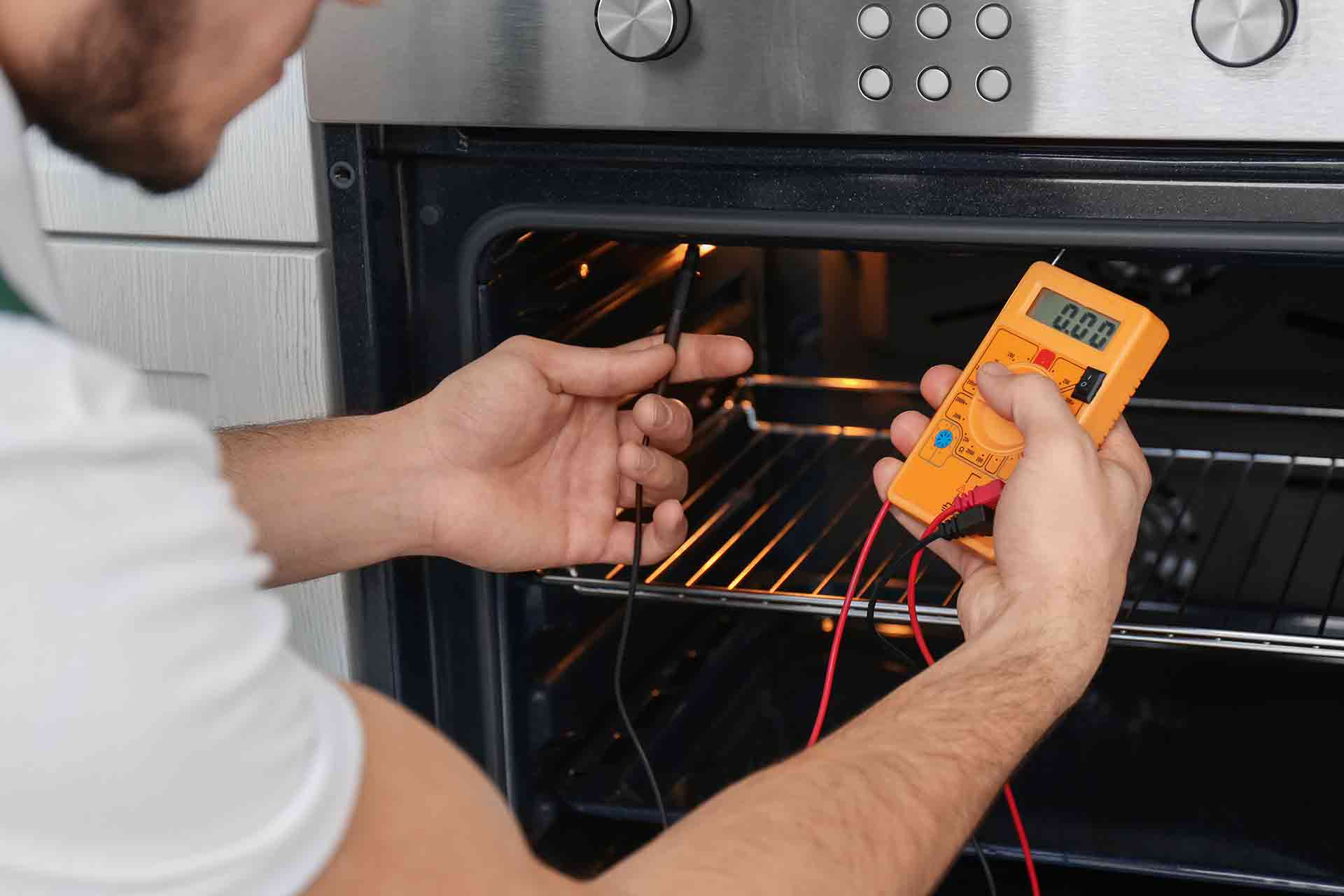
A microwave repair runs a median of $376, and the diagnostic visit is $76 rather than our usual $99. Built-in and over-the-range microwaves are almost always worth repairing, because replacing one means cabinet and venting work on top of the appliance. On a countertop unit you get the full price before any work starts.
What microwave repair costs
| Amount |
|---|
| Median repair, part replaced | $376 |
| Middle half of jobs | $265 to $527 |
| Microwave diagnostic visit | $76 |
From 99 completed microwave repairs where a part was replaced. Your exact part is priced on the visit, as one total with labour.
Which microwaves are worth repairing
Built-in, over-the-range, drawer and speed-oven microwaves are the units we repair most, because for them a repair is almost always the better spend.
Countertop units are welcome too. The technician finds the fault, gives you the full price before any work starts, and you decide with that number in front of you.
The case for repairing an installed unit comes down to what replacing one actually involves.
Built-in and over-the-range: repair almost always wins
Replacing a built-in microwave is not swapping an appliance, it is a small carpentry job. The unit is sized to a trim kit and a cabinet opening, and a replacement that is even slightly different in dimensions means modifying the cabinet. Over-the-range units add venting, either ducted to the outside or recirculating, plus mounting hardware and a wall plate, and they are heavy enough to be a two-person install.
So the arithmetic reverses. A $376 repair against an appliance that costs several times that, plus fitting, plus possible cabinet work, is straightforwardly worth doing.
Worth telling us when you book
What the display shows. Demo or showroom mode is the first thing the technician rules out, and it turns up more often than people expect, including on units that have worked for years after someone pressed the wrong combination while cleaning. The display lights, the turntable turns, the fan runs, and nothing heats, because the magnetron is disabled by design. Mention any unusual message on the display.
The door. Microwaves have several interlock switches that must all confirm the door is shut before the magnetron is allowed to run. A door that has dropped slightly on its hinges, or a latch with a broken tab, produces a unit that lights up and does nothing. Mention whether the door sits flush and closes with a definite click.
The outlet. Over-the-range microwaves are often on a circuit shared with the kitchen counter, and a tripped GFCI several feet away explains a completely dead unit. Tell us whether the outlet works with something else plugged in.
This is the one appliance we will not encourage you to open, ever. A microwave contains a high-voltage capacitor that stores a lethal charge and holds it after the unit is unplugged, sometimes for a long time. It is not comparable to the residual charge in other appliances. There is no user-serviceable repair behind the outer case, and taking the cover off a unit that has been disconnected is not safe on its own. Everything past the door and the control panel is technician work with the right discharge procedure.
Matching the symptom to the likely cause
- Runs normally but food stays cold. Demo mode first, then the magnetron or the high-voltage circuit. This is the classic presentation.
- Completely dead, no display. Outlet, breaker or a blown internal fuse. On over-the-range units the technician also checks the GFCI on the counter circuit.
- Sparking or arcing inside. Stop using it now. Usually a burnt waveguide cover or damaged interior paint exposing bare metal, and it worsens quickly.
- Loud buzzing under load. Often the magnetron or transformer beginning to fail. A microwave that has become noticeably louder while heating is telling you something.
- Turntable will not turn. The cheapest thing on this page: usually the drive motor or a coupler that has come off its spindle, and sometimes just the plate seated wrongly.
- Buttons unresponsive. Touchpad or control board. Mention whether a power cycle at the breaker changed anything.
- Over-the-range fan or light not working. Independent of the cooking function, and usually a cheap fix that does not require touching the high-voltage side.
A fuller walkthrough of the not-heating case, which is by far the most common complaint, is on microwave not heating. A unit that has started to smell, whether that is trapped food, loaded grease filters or something closer to burning, is on microwave smells bad.
How a microwave visit works
- You book online or by phone. Tell us whether the unit is countertop, built-in or over-the-range, because it decides how the technician plans the visit and which parts to bring.
- The technician checks the operating mode, door interlocks, the fuse, and measures actual heating performance, then the high-voltage side with the correct discharge procedure if needed.
- You get the full price before work starts, part and labour together.
- You approve or decline. Declining costs the $76 diagnostic and nothing more.
- Approved work carries a 90-day parts and labour warranty.
What shortens a microwave’s life
Running it empty is the main one. With no food to absorb the energy, it reflects back into the magnetron, and a few seconds does no harm while repeated empty runs will kill it. This happens most often when someone uses the microwave as a timer.
Second, metal and foil. Beyond the immediate arcing, each event can pit the waveguide cover and damage the interior coating, which then arcs more easily afterwards. A microwave that has started sparking with ordinary food usually has a history.
Third, letting spills bake onto the roof and the waveguide cover. That small mica panel on the side or top wall is a functional part, not trim, and food carbonised onto it is the most common cause of arcing we find. Wipe it. If it is already burnt through, it needs replacing rather than cleaning.
And on over-the-range units, the grease filters. A blocked filter makes the fan work against resistance and pushes heat back into the cabinet above the range, which is a hot environment for electronics already.
What we repair
Built-in, over-the-range, drawer and countertop microwaves, plus the microwave side of combination and speed ovens, from all major manufacturers. On countertop units the technician gives you the full price before any work, so you can weigh the repair against a new unit. Expected service life is on how long microwaves last.
Over-the-range units do two jobs, and one of them fails quietly
An over-the-range microwave is also your range hood, and the extraction side fails far more often than the cooking side without anyone noticing. The fan slows, the grease filters clog, and the kitchen simply gets smokier over a period of months.
Worth knowing: many of these units are installed in recirculating mode, meaning they filter the air through a charcoal cartridge and blow it back into the room rather than venting outside. That cartridge is a consumable with a life of six to twelve months, and in most homes it has never been changed. If your extraction seems weak, that cartridge is the first thing the technician checks, and it is a quick consumable to replace.
The metal grease filters underneath are washable rather than disposable. They go in the dishwasher, and a clogged pair makes the fan work against resistance while pushing heat back into the cabinet where the electronics live.
Speed ovens and microwave drawers
Two formats we see increasingly, and both sit firmly on the repair side. A speed oven combines microwave and convection heating in one built-in cavity, and it is expensive enough that repair is always the right call. A microwave drawer, mounted below the counter and opening like a drawer, has a mechanism that a conventional microwave does not, and drawer rail and motor faults are the common complaint rather than anything on the cooking side.
Both are built-in appliances fitted to a specific opening, so the same logic applies as with any built-in unit: the fitting costs more than the appliance, and a repair at our median price is a fraction of replacement.
Discounts
$30 OFFVeteransEvery repair
$30 OFFSeniorsEvery repair
$20 OFFNew customersFirst service call
The $179 annual membership covers five free diagnostics a year, priority scheduling with a 24 to 48 hour response, $30 off labour on every repair and an extended warranty on Bozmanfix work.
Frequently asked questions
How much does microwave repair cost?
The median microwave repair where a part is replaced is $376, with the middle half of jobs between $265 and $527. The diagnostic visit is $76, lower than our $99 standard for other appliances. The technician prices your specific part on the visit, before any work starts.
Is it worth repairing a microwave?
A built-in or over-the-range microwave is worth repairing almost every time, because replacing one means matching a cabinet opening or re-doing venting and mounting, which costs far more than the appliance alone. On a countertop unit you get the full price before any work starts, so you can compare it with a new one.
My microwave runs but does not heat the food. What is that?
Demo or showroom mode produces exactly this symptom: the display lights, the turntable turns, the fan runs, and the magnetron is disabled by design. The technician rules that out first. If it is not demo mode, the fault is usually in the magnetron or the high-voltage circuit, which is technician work.
Can I take the cover off my microwave to look inside?
No. A microwave holds a high-voltage capacitor that stores a lethal charge and retains it after the unit is unplugged. Unlike other appliances, disconnecting from the wall is not sufficient to make it safe, and there is no user-serviceable part behind the outer case. Everything past the door and control panel needs the correct discharge procedure.
My microwave is sparking inside. What should I do?
Stop using it. The usual cause is a burnt waveguide cover, the small mica panel on the wall or roof of the cavity, or interior paint damage exposing bare metal. Both worsen with every use, and the mica panel is a functional part that needs replacing rather than cleaning once it is burnt through.
Why does my microwave keep failing?
The most common avoidable cause is running it empty, often when it is used as a kitchen timer: with nothing to absorb the energy it reflects back into the magnetron. After that, arcing from metal or foil pits the waveguide cover, and baked-on spills on that panel cause further arcing. On over-the-range units, blocked grease filters push heat back into the cabinet and shorten electronics life.
The light and fan work on my over-the-range microwave but it will not cook.
Those functions are independent of the cooking circuit, so the unit having power tells you nothing about the magnetron side. The technician checks demo mode and the door latch first, since interlock switches must all confirm the door is closed before heating is allowed, and then moves to the high-voltage side.
Book a microwave technician online or by phone, and you get the full price before any work starts.
Book online (470) 516-3390